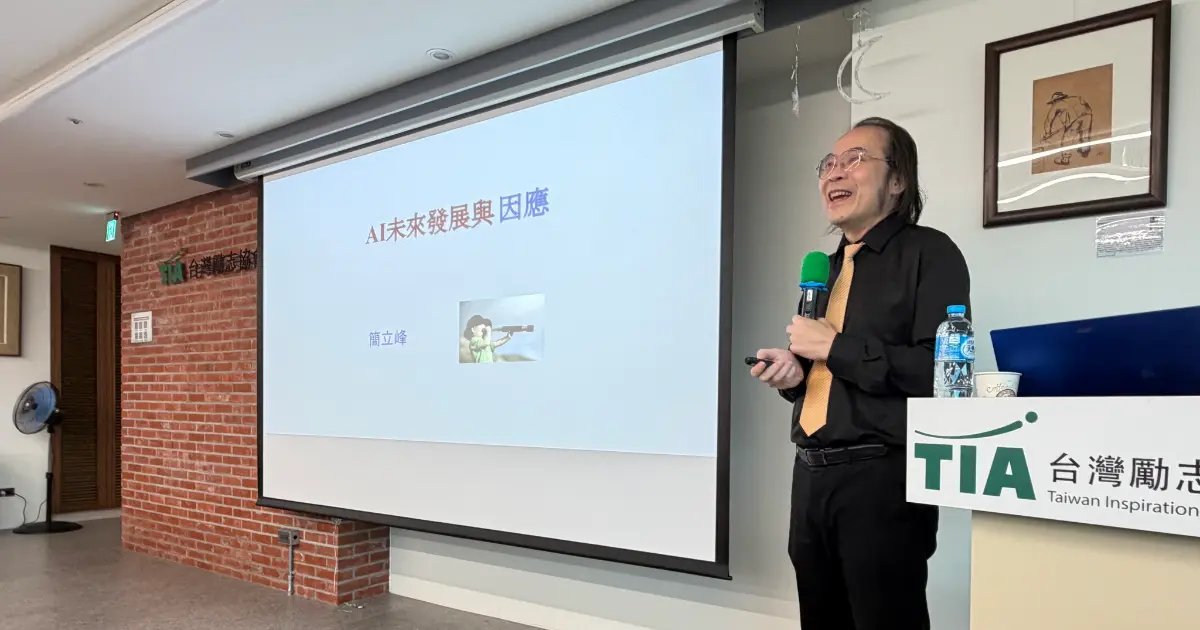
TSMC Reportedly Planning Three New 2nm Fabs; "Giggling Wei" Says AI Data Center Scale to Triple – A 'Happy Problem' for TSMC and Taiwan
According to media reports, Taiwan Semiconductor Manufacturing Company (TSMC), the world’s leading contract chipmaker, plans to build three additional 12-inch wafer fabs equipped with 2-nanometer (N2) process technology in Taiwan. While this information has not yet been officially confirmed by TSMC, given the recent surge in global demand for artificial intelligence (AI) chips and the numerous new investment projects currently brewing, the plan to invest in new fabs appears well-founded.
The primary driver behind TSMC’s plan to construct three new fabs in Taiwan is likely the robust demand for AI. As the AI industry evolves rapidly, demand for high-performance AI chips from major clients—including NVIDIA, Apple, AMD, Google, and Tesla—is showing exponential growth.
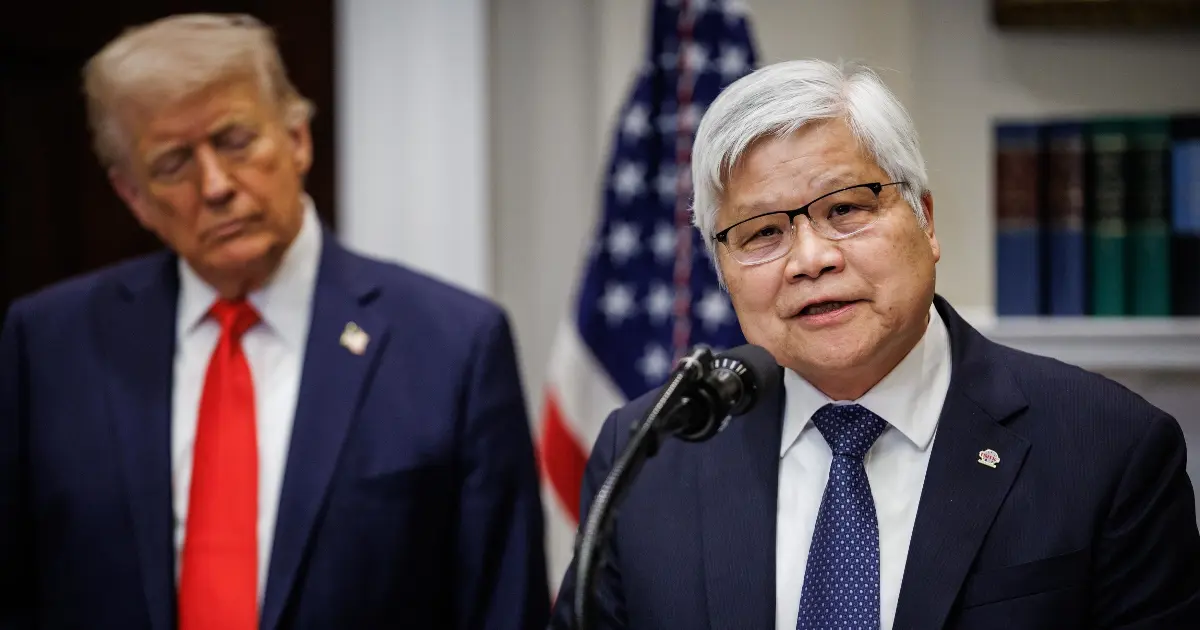
Furthermore, existing advanced process capacity is in short supply and can no longer fully meet these massive orders. Last week, former TSMC Chairman Mark Liu and current Chairman C.C. Wei received the Robert N. Noyce Award from the Semiconductor Industry Association (SIA). The two honorees sat on stage for a discussion alongside AMD Chair and CEO Lisa Su.
In his acceptance speech, C.C. Wei remarked humorously, "In a setting like this, many people will ask me for wafers. I actually thought about wearing a T-shirt that says 'No more wafer'." He added that when it comes to advanced process capacity, the reality is simply: "Not enough, not enough, not enough."
Wei emphasized, "AI is just the beginning, and the potential is limitless. If you add up the ambitions of these clients, the scale of future AI data centers will be three times the current size." He also quipped, "The problem is, there is one client—I don't know why—who hasn't come to talk to me personally yet."
Wei’s comments drew laughter from the audience. C.C. Wei is truly living up to his nickname, "Giggling Wei" (a play on his English initials "C.C.," which sound like the Chinese onomatopoeia for giggling, reflecting his humorous and cheerful style). Attendees were left wondering whether his playful jab was directed at OpenAI CEO Sam Altman or Tesla CEO Elon Musk.
Robert N. Noyce was a co-founder of Intel and one of the inventors of the integrated circuit; the award named after him represents the highest honor in the semiconductor industry. Previous recipients include TSMC founder Morris Chang (2008), AMD CEO Lisa Su (2020), and NVIDIA CEO Jensen Huang (2021). Presenting the award to C.C. Wei and Mark Liu this year underscores Taiwan’s pivotal status in the global semiconductor landscape.
Additionally, U.S. Secretary of Commerce Howard Lutnick, who frequently comments on Taiwan and has previously stated that the U.S. and Taiwan should share advanced manufacturing 50/50, delivered remarks via a pre-recorded video. He paid tribute to Liu and Wei, stating, "Your leadership at TSMC has changed the world," noting their role in advancing manufacturing and setting standards that push the entire industry forward. His remarks were met with cheers from the audience.
In such a significant venue, with many semiconductor industry titans present, Wei stated that clients are building AI data centers at three times the current scale. Although he did not mention specific wafer order quantities, it is evident that demand clearly exceeds TSMC's capacity.
AI Giants Compete for Capacity: Altman and Musk's Ambitions
Interestingly, Sam Altman recently visited TSMC in Taiwan, suggesting he has communicated with TSMC's senior management. Two years ago, he proposed an ambitious plan to raise between $5 trillion and $7 trillion to invest in semiconductor fabs.
This year, OpenAI has also engaged in large-scale collaboration with NVIDIA, planning to deploy at least 10 GW (gigawatts) of NVIDIA systems. NVIDIA plans to invest up to $100 billion in OpenAI, funds that will be used to purchase more NVIDIA chips.
In addition, OpenAI has reached a multi-year agreement with AMD to deploy AMD chips (expected to require 6 GW of power). For custom AI chips (ASICs), OpenAI is collaborating with Broadcom. The company is also pushing the "Stargate" project with Oracle, Microsoft, and SoftBank, investing $500 billion in hyperscale AI data centers.
However, Altman has recently come under increased pressure. Google’s launch of its Gemini 3 and Nano Banana Pro models has noticeably outperformed competitors, striking a blow to leading firms, including the current AI leader, OpenAI. Altman has reportedly expressed a determination internally to catch up with Google. Furthermore, Google’s own design of TPU (Tensor Processing Unit) chips is impacting NVIDIA, the leader in AI GPUs.
As for Elon Musk, his moves are even more aggressive; he even intends to build his own fabs. Musk has stated that to meet Tesla’s massive chip requirements for AI and robotics, Tesla may need to build a hyperscale wafer fab, which he calls a "Terafab."
Musk pointed out that due to colossal demand, even with existing suppliers like TSMC and Samsung producing at full capacity, output remains "insufficient" to meet Tesla’s future AI chip needs. Therefore, building a proprietary fab is a necessary solution.
Regarding his Terafab concept, this hypothetical facility is described as being larger than a standard "Gigafab," with an initial target of producing 100,000 wafers per month, eventually expanding to 1 million wafers per month.
Musk has also mentioned considering a partnership with Intel’s foundry service (Intel Foundry) rather than building completely from scratch. Notably, Intel’s current CEO is Lip-Bu Tan, adding another layer of intrigue to potential cooperation. Additionally, Musk has previously committed $16.5 billion in orders over the next five years to Samsung Electronics’ Texas plant and has even said he intends to visit the Texas facility personally to inspect production.
Whether it is OpenAI or Tesla, these moves indicate that clients are becoming impatient with the shortage. This is perhaps a "Happy Problem" for TSMC and is likely the reason behind internal plans to actively expand new facilities.
Indeed, if client demand is high and TSMC’s existing capacity cannot meet orders, TSMC must accelerate investment to consolidate its leading position and prevent competitors like Samsung or Intel from finding an opening to enter the market.
Moreover, although TSMC has established plants globally (such as in Arizona, USA; Kumamoto, Japan; and Dresden, Germany) to disperse risk and meet geopolitical requirements, its Taiwan facilities remain the core of technical R&D and production. Furthermore, Taiwan possesses a mature and complete semiconductor ecosystem—from equipment and materials to packaging and testing—providing efficient and timely support, which is critical for rapidly advancing cutting-edge processes.
Therefore, continuing expansion in Taiwan ensures that critical technology remains rooted there while leveraging the advantages of Taiwan’s complete semiconductor cluster to improve production efficiency. This is likely TSMC’s top priority.
Humorous Stock Prediction: "Egg White" Pun Points to 2000
With strong fundamentals and wafer capacity clearly falling short of demand, what is TSMC’s future investment value? I recently heard a joke circulating in industry circles, recounted as having been told by C.C. Wei.
A friend told me that during a dinner with Chairman Wei, someone asked him how high TSMC’s stock price would rise. Chairman Wei asked the group, "If you take the yolk out of an egg, what is left?" The friend replied, "Only the egg white (dan-bai) and the shell remain."
Chairman Wei then asked, "How do you say 'egg white' in Taiwanese (Hokkien)?" The table erupted in laughter. In Taiwanese, egg white is called "nng-tshing," which sounds almost identical to the Taiwanese pronunciation for the number "two thousand" (nn̄g-tshing). This implied a prediction that TSMC’s stock price is poised to breach the NT$2,000 mark.
Although I have not verified this story with Chairman Wei (and indeed have no way to do so), hearing this joke attributed to the always-humorous "Giggling Wei" feels quite natural and not at all out of character.
More importantly, if TSMC maintains its high-speed profit growth—net profit in the first three quarters of this year increased by more than 50% year-on-year—and based on projected EPS growth for the next two years, a stock price rising to NT$2,000 would seem reasonable.
In fact, C.C. Wei has increased his personal holdings in TSMC multiple times during his tenure as CEO and Chairman. From late 2022 to early 2023, he bought 467 lots (467,000 shares) of TSMC stock over three consecutive months, investing an estimated total of over NT$179 million.
Additionally, in April 2024, when TSMC’s stock price dipped due to geopolitical influences (such as U.S. tariff policies), Wei made another move after a 28-month hiatus, buying 20 lots (20,000 shares) at a cost of approximately NT$780 per share. This move was seen by outsiders as "entering the market during a crisis," demonstrating his firm confidence in the company's operations.
Beyond supporting the stock price with personal action, Wei has clearly expressed optimism about the company’s prospects in public settings and encouraged investors. For instance, when presiding over his first shareholder meeting in June this year, he directly gave shareholders a "stock tip," stating: "Anyone in the world who is doing artificial intelligence must work with TSMC, so... you can't go wrong buying more TSMC stock!"
A Happy Problem: Massive Power Demand Looms as Expansion Obstacle
However, with TSMC planning to add three more wafer fabs in Taiwan, power consumption is evidently the most critical issue ahead.
Because more advanced technologies like 2nm (N2) and equipment such as Extreme Ultraviolet (EUV) lithography machines are "power guzzlers," the electricity consumption of a single advanced wafer fab is comparable to that of a mid-sized city. TSMC’s current power consumption already accounts for a significant proportion of Taiwan’s total electricity usage; it is estimated to be around 9% in 2024, and this ratio will rise as new fabs come online.
Wafer fabs have extremely high requirements for power stability. The manufacturing process cannot be interrupted; any power outage could cause immense losses. Therefore, TSMC requires an absolutely stable and uninterrupted power supply.
Furthermore, regarding regional power imbalances, northern Taiwan has long relied on power transmission from central and southern regions. With most advanced wafer fabs located in the Hsinchu Science Park (Bamboo Science Park) and the Southern Taiwan Science Park, specific science parks face significant power supply pressure. TSMC’s continued addition of fabs is certainly a positive factor driving economic growth, but the issue of electricity is clearly also a "Happy Problem" for Taiwan. However, this is a problem that likely needs to be solved quickly to prevent Taiwan from falling into a predicament of having "orders in hand, but no power available."
Related Articles
Micron Announces Its Largest Rewards Ever. Its Taiwan Union's Demands Expose a Clash of Pay Systems. A strike threat at Taiwan's largest foreign investor, read in three dimensions
TSMC's 3nm rinse comes exclusively from AEMC, a Taiwanese company once withdrawn from the Emerging Stock Board
Taiwan AI Industry Upgrade Forum Series || Event Report:America Wants More Manufacturing. What Does It Take for Taiwan’s Suppliers to Follow?