Behind the Memory Price Surge: The AI Arms Race and Taiwan's Strategic Pivot
Memory prices have skyrocketed recently, with costs for both Dynamic Random Access Memory (DRAM) and NAND Flash multiplying since the beginning of the year. While the memory industry is historically known for its cyclicality, this current wave of price hikes has been exceptionally fierce and rapid. Industry consensus attributes this primarily to an explosion in demand for Artificial Intelligence (AI), with shortages expected to persist through next year (2026). The future dynamics of the memory sector warrant close attention.
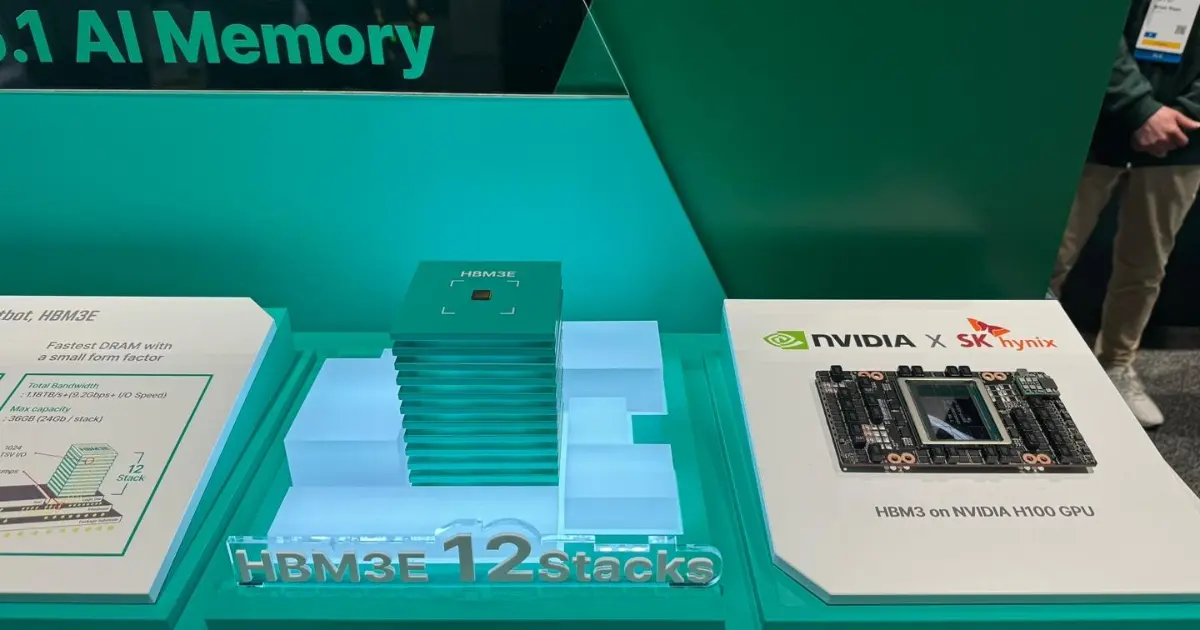
Driven by surging AI demand, major DRAM manufacturers are aggressively shifting production capacity toward High Bandwidth Memory (HBM), which is essential for AI servers. This shift is displacing capacity for traditional standard memory, such as DDR5 and DDR4. This capacity displacement has created severe market shortages, driving prices up several times over.
AI has become the core engine driving growth in the semiconductor industry. The entities currently pouring capital into AI are tech giants such as Amazon, Google, Microsoft, and Meta. These Cloud Service Providers (CSPs) possess immense cash flow and profitability. Given that they are willing to spend hundreds of billions of dollars competing for Graphics Processing Units (GPUs), they are naturally willing to spend tens of billions to secure HBM supplies.
For AI servers, the inability to source critical HBM components means shipments cannot be made. Consequently, for buyers, price is no longer the primary consideration; securing allocation is the key to winning.
Although the application scopes of NAND Flash and DRAM differ, Flash prices are also being pulled upward by the AI boom. As the build-out of cloud and AI servers accelerates and traditional Hard Disk Drives (HDDs) increasingly fail to meet performance requirements, enterprise storage demand is shifting heavily toward Solid State Drives (SSDs). This trend is driving massive demand for Enterprise SSDs in data centers, directly pushing up NAND Flash prices. Furthermore, tight supply in legacy Flash process nodes is causing prices to rise across the board.
In summary, the world's top three memory manufacturers—SK Hynix, Samsung Electronics, and Micron Technology—are concentrating their capacity on high-margin HBM and Enterprise SSD products. This strategic shift has constrained overall memory supply, triggering a sharp spike in prices.
In fact, the AI investment frenzy has not only made GPUs scarce but has also driven up prices for TSMC’s foundry services, as well as for key components like passive components and Printed Circuit Boards (PCBs). As nations increasingly view "AI computing power" as a symbol of national strength, US tech giants continue to increase investment, while China relies on its vast domestic market and government subsidies. In this contest, both the US and China possess the capacity for long-term capital injection, suggesting this investment wave will not subside anytime soon.
AI Bubble Concerns? Industry Sees Long-Term Structural Demand
Addressing market concerns about a potential "AI bubble," K.S. Pua, CEO of NAND Flash controller giant Phison Electronics, noted that the PC industry grew for thirty years and the smartphone industry for twenty. In comparison, ChatGPT was launched only three years ago. He believes the AI industry is still in its infancy with a long road ahead, dismissing concerns of a bubble.
While the stock market may indeed have pockets of froth—where companies with valuations disconnected from fundamentals face inevitable correction—the AI industry itself is not a bubble. AI has become a "must-have" requirement with long-term prospects. As investment legend Warren Buffett famously said, "Only when the tide goes out do you discover who's been swimming naked." Time will ultimately prove which enterprises possess true competitiveness.
Looking back at the Dot-com Bubble of 2000, most participants were cash-strapped startups that collapsed once funding dried up. In contrast, the current AI wave is driven by deep-pocketed multinational corporations engaged in fierce competition. Recently, Google launched Gemini 3 and its Nano Banana Pro, demonstrating leading technical capabilities. Under the psychological pressure of "FOMO" (Fear of Missing Out), major corporations feel they cannot afford to lose, providing a solid foundation for the continued development of AI.
Google is currently not only leading in AI models but is also developing its own Tensor Processing Unit (TPU) chips, challenging both OpenAI’s software dominance and NVIDIA’s hardware hegemony. This proves that the AI industry is still in a "Warring States" period of intense fragmentation and rivalry. With major corporations rushing to claim leadership, the outcome of this contest remains highly unpredictable.
Propelled by robust demand from large enterprises, the memory supply chain—spanning wafer manufacturing, module makers, and system suppliers—must now prioritize orders from enterprise clients. Consequently, the needs of the general retail market are difficult to meet, making future memory price trends even harder to forecast.
China’s Expansion and Taiwan’s Edge AI Opportunity
A significant variable on the horizon is the aggressive expansion of China’s memory industry. Over the next three to five years, China’s Flash capacity is projected to grow by 50% annually, with Yangtze Memory Technologies Corp (YMTC) expanding most aggressively. Despite this surge in capacity, market demand remains stronger, meaning new supply is expected to be absorbed quickly. China will undoubtedly become a force to be reckoned with in the global memory industry.
China’s Flash industry is catching up at a rapid pace. Facing semiconductor equipment export controls led by the US, China has pivoted to developing its own manufacturing equipment. Although initial yields and performance may lag slightly behind international leaders, the inability to import equipment leaves Chinese players with no choice but to improve through continuous iteration. Supported by government subsidies and a massive domestic market, the influence of China’s memory industry will gradually expand.
However, many industry insiders admit they have little time to consider strategies for three to five years down the road, as they must prioritize solving the immediate crisis of having "no inventory to sell." The industry widely expects the shortage to persist until the end of next year. Smaller companies, or those unable to secure capacity, face the existential threat of supply chain breaks or even production halts.
Reviewing the history of Taiwan’s memory industry, local manufacturers gradually faded from the mainstream manufacturing market following the industry reshuffle after the 2009 financial crisis. At that time, German giant Qimonda declared bankruptcy, and Japan’s Elpida was severely damaged (later filing for bankruptcy in 2012 and being acquired by Micron). Currently, dominance in the global memory market is held by South Korea, the US, Japan, and China. Taiwan’s manufacturers have largely retreated to second-tier positions or niche markets to maintain competitiveness.
Although Taiwan has limited opportunities in memory wafer manufacturing, there is still significant room for growth in application fields. Phison Electronics is a prime example; it is neither a wafer manufacturer nor a pure module maker. Instead, it has adopted a unique "IC Design (Controller) + Module Integration" business model, successfully establishing a niche advantage within the AI wave.
Furthermore, AI computing is bound to extend from the cloud to the edge (Edge AI), which presents a key opportunity for Taiwan. Phison CEO K.S. Pua uses a metaphor: cloud computing is like "staying in a hotel," where you pay daily rent and prices can rise at any time. Edge computing, however, is like "buying a house"—while the upfront hardware cost (the down payment) is higher, once paid off, the asset belongs to you, and long-term costs are limited to utilities.
As the importance of the memory industry grows day by day, Taiwanese players—now viewed as tier-two suppliers—must think deeply about how to leverage Taiwan’s strong competitiveness in logic IC design and wafer foundry services to integrate resources and regain a significant foothold in the global memory market.
Related Articles
Micron Announces Its Largest Rewards Ever. Its Taiwan Union's Demands Expose a Clash of Pay Systems. A strike threat at Taiwan's largest foreign investor, read in three dimensions
TSMC's 3nm rinse comes exclusively from AEMC, a Taiwanese company once withdrawn from the Emerging Stock Board
Taiwan AI Industry Upgrade Forum Series || Event Report:America Wants More Manufacturing. What Does It Take for Taiwan’s Suppliers to Follow?