Phase 3 Data Target Met, Share Price Surges Past NT$500! How Lin BioScience Chairman Dr. Lin Yu-hsin Navigated from "Market Undervaluation" to a "Moment of Glory"
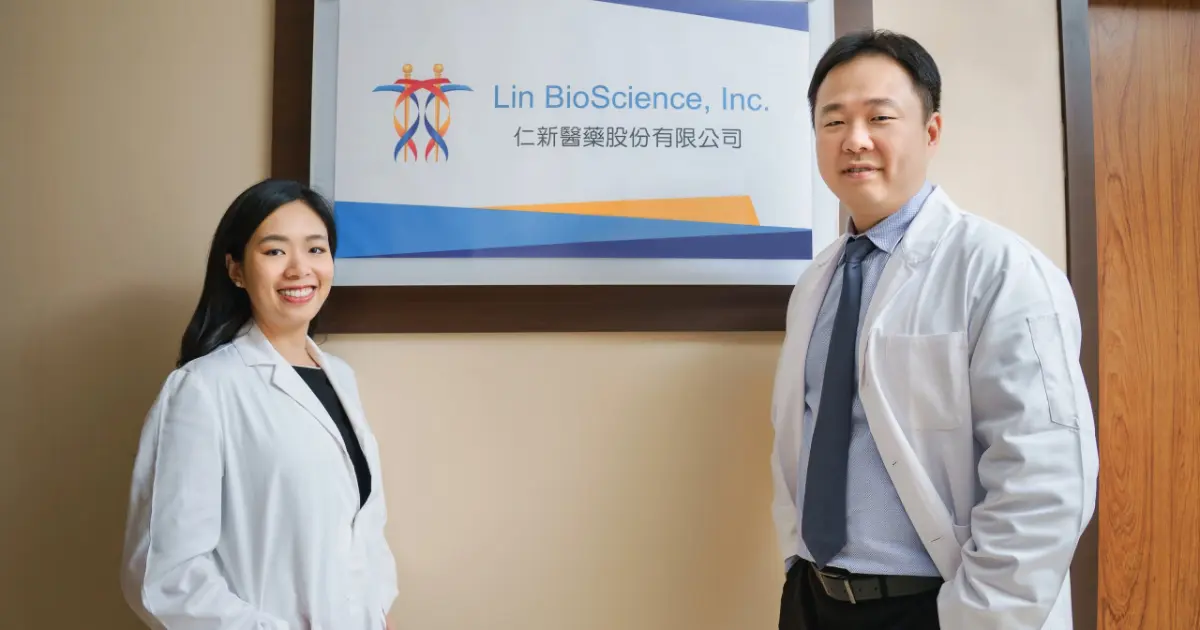
(Lin BioScience co-founders Dr. Lin Yu-hsin (right) and Dr. Irene Wang. (Photo credit: Lin BioScience))
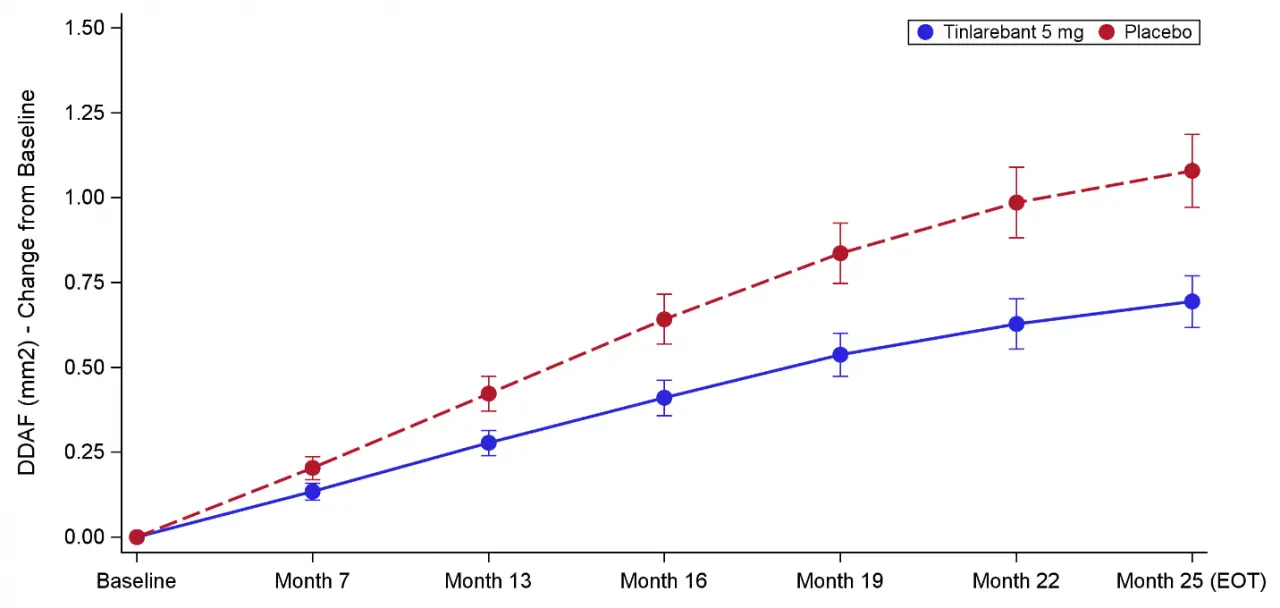
Lin BioScience (TWSE: 6696), a Taiwan-based drug development company, announced on the evening of the 1st that its subsidiary, Belite Bio, has achieved a major clinical breakthrough. The global Phase 3 clinical trial of its novel drug LBS-008 (Tinlarebant) for adolescent Stargardt disease has yielded positive statistical results on its primary endpoint, achieving statistical significance—effectively securing positive top-line data.
Amid a recent quiet period for major news in the biotech sector, this announcement marks a significant milestone. Belite Bio (NASDAQ: BLTE) is a drug development company listed in the United States and a key subsidiary spun off from Lin BioScience, which retains a 48.43% stake.
The significance of Belite’s success lies in the fact that LBS-008 is the first investigational drug to demonstrate efficacy in a global Phase 3 trial for Stargardt disease. Stargardt disease is a rare genetic retinal disorder that causes progressive loss of central vision in adolescents, for which there are currently no approved treatments globally.
There are an estimated 50,000 patients with Stargardt disease in the U.S. alone, with a larger population globally. Belite Bio expects to submit a New Drug Application (NDA) to the U.S. FDA in the first half of 2026, signaling promising market opportunities ahead.
The Long Road of Drug Development: Facing Early Market Tests
Lin BioScience was founded in 2016 by Dr. Lin Yu-hsin. Dr. Lin holds an MD and PhD from the University of Sydney, as well as an MBA from Columbia University and London Business School. He currently serves as the Founder and Chairman of Belite Bio.
Co-founder Dr. Irene Wang serves as the General Manager and Chief Scientific Officer (CSO) of Lin BioScience. She holds a PhD in Biochemistry from National Taiwan University, an MBA from UC San Diego, and previously served as a postdoctoral fellow at Scripps Research in the U.S.
Since the inception of Lin BioScience, I have had multiple opportunities to interview Dr. Lin and Dr. Wang, hearing their insights on corporate strategy and the challenges they have navigated.
The primary challenge stems from the inherently long development cycles of new drugs. After Lin BioScience listed on Taiwan’s Emerging Stock Board, Dr. Lin recalls that in the early years, the company’s intrinsic value was not fully recognized by the market, and they faced significant skepticism and challenges. However, in 2022, he successfully spearheaded Belite Bio’s listing on the Nasdaq, where it quickly gained traction with U.S. investors, becoming a "unicorn" with a market capitalization exceeding $1 billion.
Dr. Wang has also received industry recognition over the years, being selected multiple times as "Best CEO" by media outlets and named an "Outstanding Woman Leader" by JLABS, the premier life science incubator of Johnson & Johnson.
Whether navigating early market undervaluation or celebrating today’s triumph, securing key clinical data after nearly a decade has finally brought market affirmation to their efforts. This success adds another inspiring chapter to the biotech industry's narrative of "a decade of perseverance."
Nobel Laureate Barry Marshall’s Belief: A Core Entrepreneurial Spirit
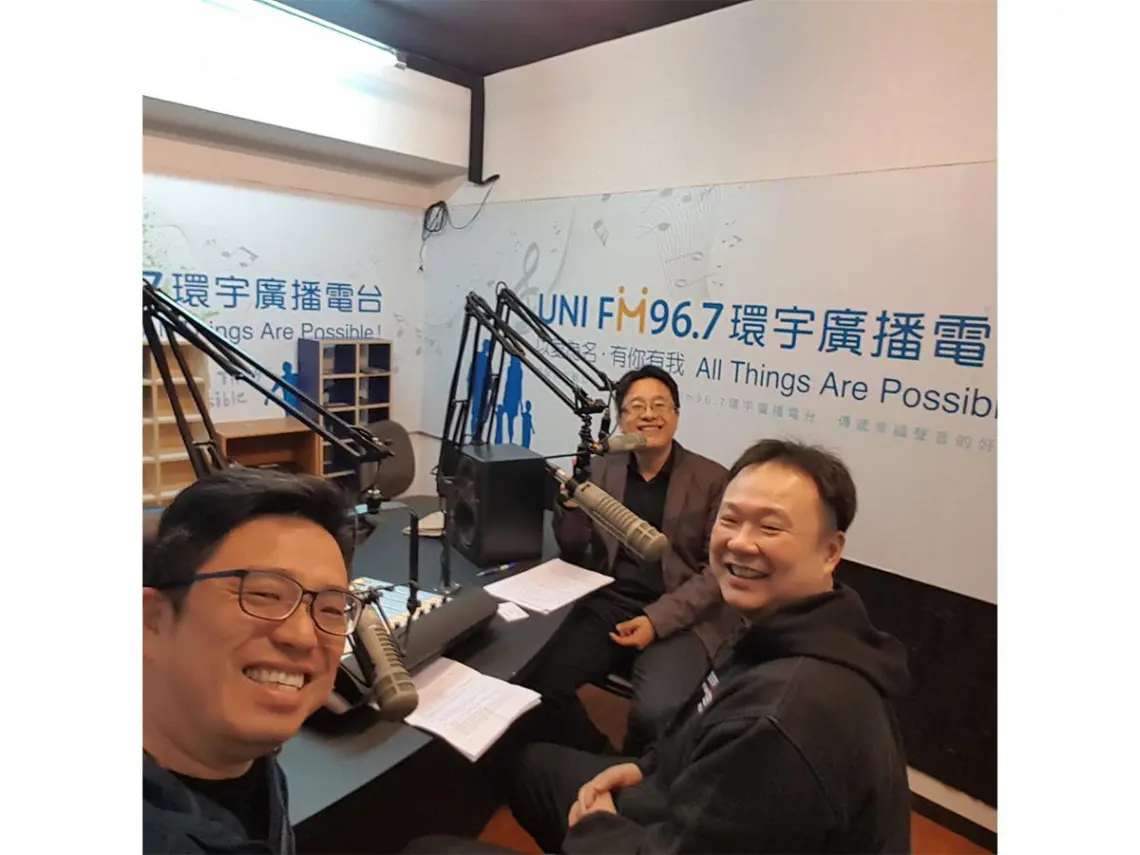
I recall inviting Dr. Lin and Lin BioScience’s Vice Director, Huang Hsien-lung, to my radio program seven years ago. Reviewing that interview today, it is evident that the company has executed almost exactly according to the goals and direction outlined back then.
At the time, I asked Dr. Lin to introduce himself, as it was rare to see a biotech entrepreneur in Taiwan returning from Australia.
He shared that he moved abroad at age six, first to South Africa, then to Australia at seventeen to attend the University of Sydney Medical School, eventually completing a PhD in Neurology. He was fortunate to study under several internationally renowned professors in neurology who served as consultants for major pharmaceutical companies, giving Dr. Lin early exposure to drug development and collaboration with big pharma.
Dr. Lin mentioned that one of his mentors was Professor Barry Marshall, the 2004 Nobel Laureate in Physiology or Medicine. Marshall was a visiting professor during Dr. Lin’s specialist training and shared his journey to the Nobel Prize.
Professor Marshall’s theory was that "stomach ulcers are caused by bacteria (H. pylori)." At the time, this completely contradicted mainstream medical consensus, which attributed ulcers to excess acid and stress. Because his ideas were unconventional, Marshall faced rejection and lacked funding to prove his theory.
Marshall’s research path was rugged; he mortgaged his house to fund his work and ultimately experimented on himself by drinking the bacteria. He successfully induced a stomach ulcer and subsequently cured it with antibiotics.
Thirty years later, the medical community validated his theory, and he was awarded the Nobel Prize. Despite facing challenges and skepticism, he persisted in his medical theory and proved his conviction through action.
Dr. Lin noted that thirty years ago, stomach ulcers were a major public health challenge with no known cure, yet Marshall broke through that barrier. This spirit of persisting in one's beliefs despite a lack of resources became the core value when Dr. Lin founded Lin BioScience. He stated that the company aims to contribute by challenging currently untreatable diseases and providing new options for the healthcare system.
Consequently, Lin BioScience targeted unmet medical needs, one of which was Dry Age-Related Macular Degeneration (Dry AMD). This aligned perfectly with Dr. Lin’s background; while macular degeneration is an ophthalmic condition, it is fundamentally a neurodegenerative disease. As an expert in neurology and cardiology, he was intimately familiar with the mechanisms involved.
Securing the Columbia University License: Proposing a Novel Clinical Strategy
I also asked him back then: How did Lin BioScience secure the drug license from Columbia University? Dr. Lin’s answer was intriguing—it was a serendipitous connection.
Dr. Lin explained that while studying at Columbia Business School, he stumbled upon the technology and proactively emailed the research team to express interest. Likely due to his status as an alumnus, they were willing to hear his proposal.
He noted that U.S. universities strongly encourage innovation and entrepreneurship, fostering a culture where professors and students are supported in spinning out research into startups.
Dr. Lin proposed taking the technology back to Asia for development. The team soon replied, asking to understand his vision better, and arranged an interview. When he arrived, he faced a panel of six or seven committee members, including the professor who invented the technology.
They grilled him on technical and clinical development questions. Dr. Lin shared his neurology background, explaining that the disease pathology was very similar to cardiovascular mechanisms he was familiar with, expressing strong confidence in the therapeutic strategy. The inventor was thrilled, as this aligned perfectly with their original intent for the drug.
Crucially, Dr. Lin proposed that beyond Dry AMD, the drug had significant potential for treating Stargardt disease (juvenile macular degeneration). Both conditions involve the accumulation of Vitamin A metabolites, but the juvenile form is caused by a genetic mutation leading to toxic buildup that accelerates nerve cell atrophy. These children typically suffer severe vision loss before the age of 18.
Dr. Lin emphasized that these children have bright futures that are being obstructed by the disease. He argued that the U.S. FDA would recognize the urgency of this drug. Even with a smaller patient population, it would likely qualify for Accelerated Approval, allowing for an earlier market launch if efficacy could be proven.
When he presented this specific regulatory strategy, the professor and team were enthusiastic. Dr. Lin had provided a new angle to accelerate the drug's path to market.
A Strategic Blueprint from Seven Years Ago, Now Precisely Realized
At the time, the committee also asked about funding. Dr. Lin’s answer was candid: "Correct, this is a capital-intensive industry." However, leveraging his business school training, he was well-versed in fundraising, investment, and IPOs. He assured them that investors were already lined up and $20 million was secured—enough to support development through Phase 2 clinical trials.
Dr. Lin emphasized that after Phase 2, if efficacy was proven, they would look to license the drug to a major pharmaceutical company or utilize the Accelerated Approval pathway for an early launch.
I remember asking Dr. Lin during the interview: "So when you went to negotiate, was the money really ready?"
"Yes," he replied. "Investors had already committed, and the company was established. We had screened many drugs, but the Columbia University asset was the one our team was most bullish on."
Satisfied with these answers, the Columbia team asked for a detailed business plan. Two weeks after submission, the selection committee voted to award the license to Lin BioScience.
Thus, Dr. Lin secured the license, beginning a ten-year journey back in Taiwan.
Seven years later, Dr. Lin can confidently say: "The strategic blueprint we mapped out seven years ago is now being realized, step by step. We have proven our original promise through action."
Reflecting on that interview and contrasting it with today’s clinical success, it is clear this entrepreneur has remained consistent throughout the journey. This not only vindicates the Lin BioScience team’s judgment but also adds a successful international case study to Taiwan’s biotech industry.
For a sector that has long faced challenges and scrutiny, this is undoubtedly a moving and milestone moment.
Related Articles
Micron Announces Its Largest Rewards Ever. Its Taiwan Union's Demands Expose a Clash of Pay Systems. A strike threat at Taiwan's largest foreign investor, read in three dimensions
TSMC's 3nm rinse comes exclusively from AEMC, a Taiwanese company once withdrawn from the Emerging Stock Board
Taiwan AI Industry Upgrade Forum Series || Event Report:America Wants More Manufacturing. What Does It Take for Taiwan’s Suppliers to Follow?