The Cultural Power of "OneSong": How Taiwan's Elements Are Entering the Global Halls of Classical Music
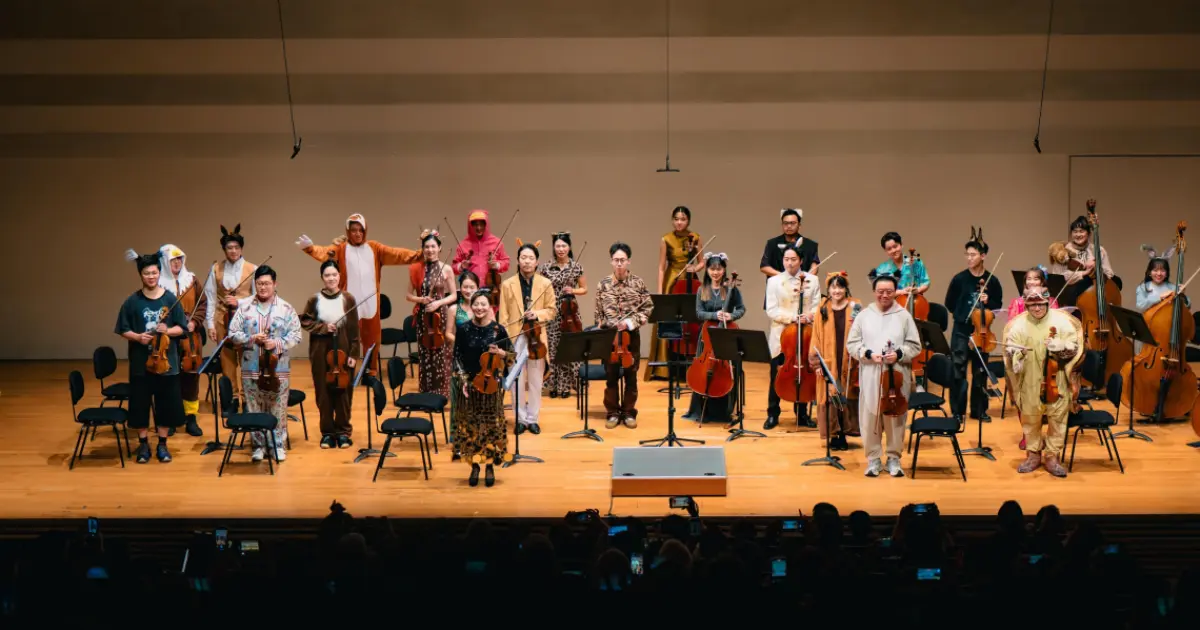
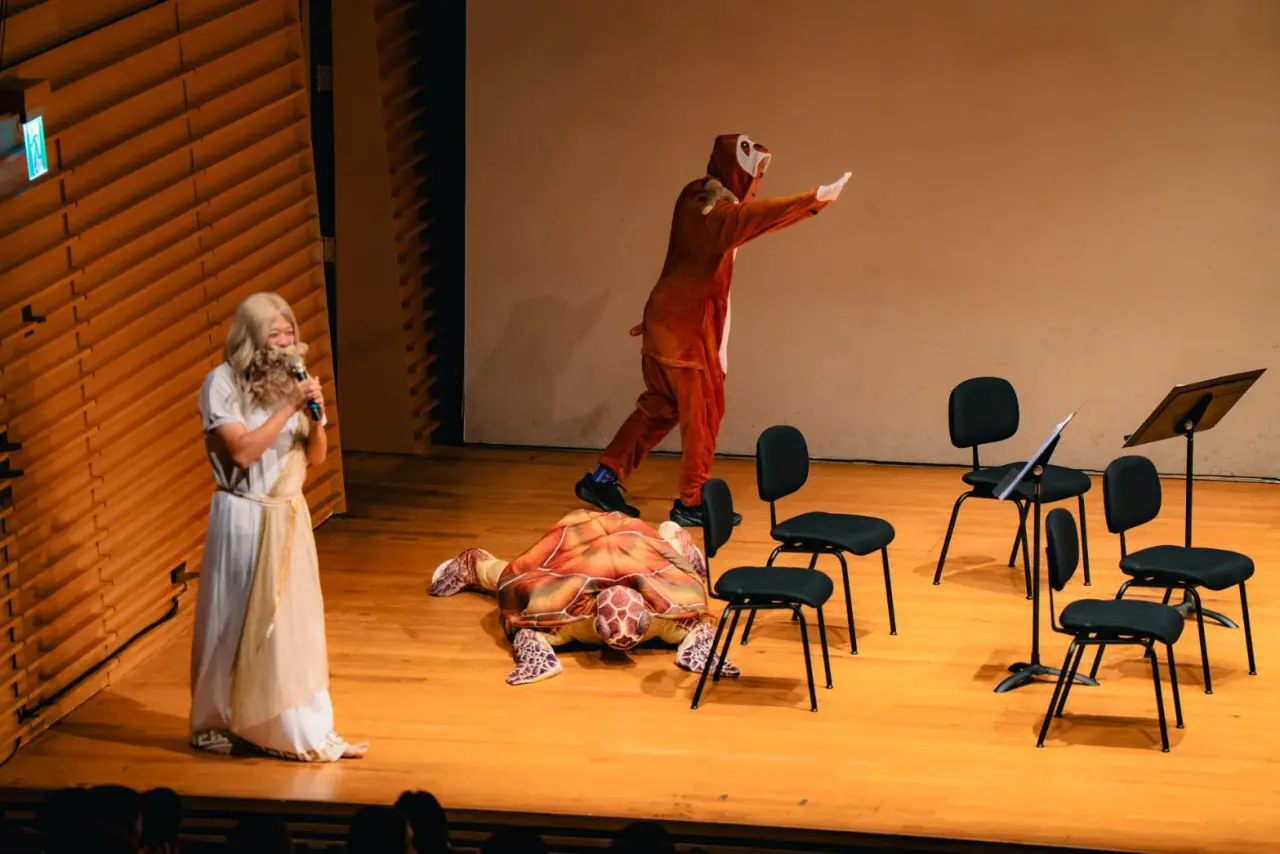
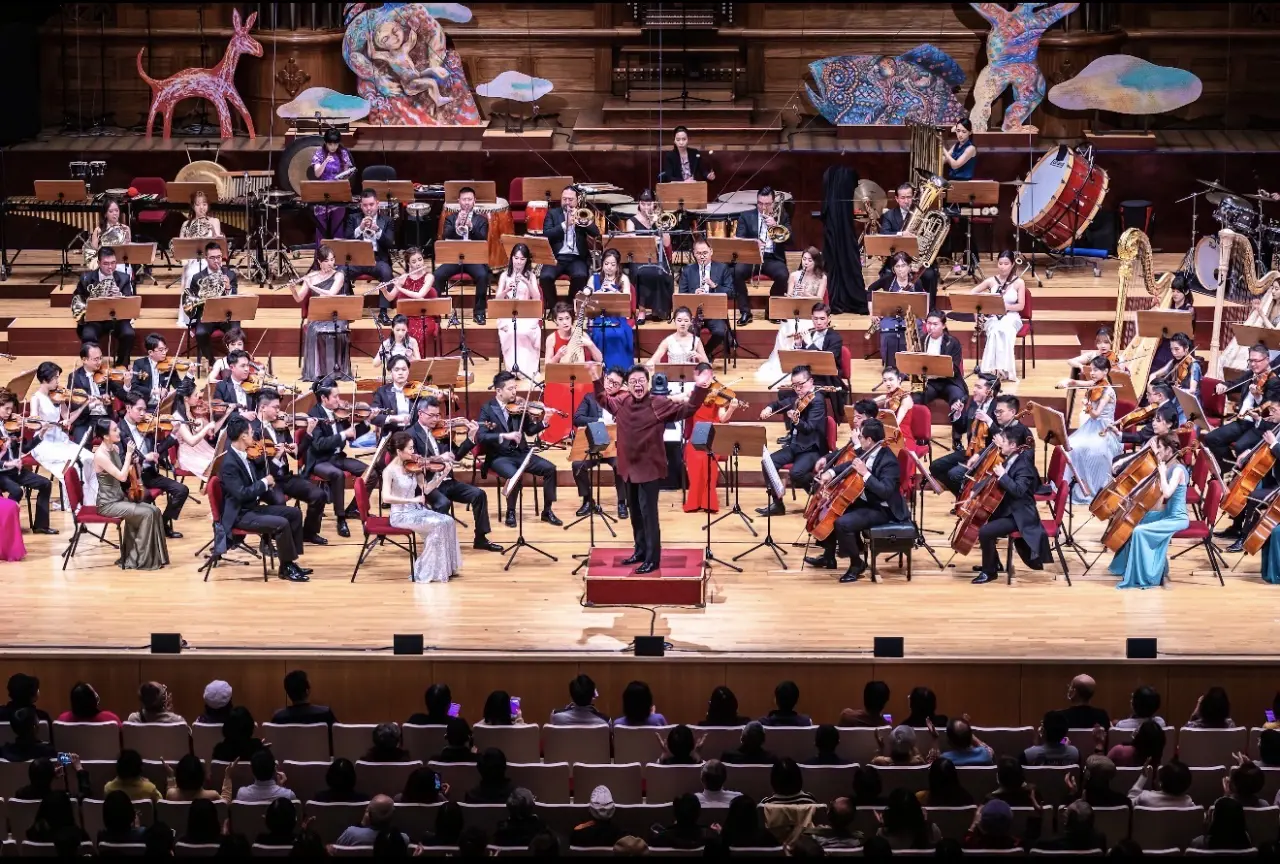
In early December, the OneSong Orchestra, a premier ensemble dedicated to performing works inspired by Taiwanese heritage, hosted a "Family Animal Music Party." The concert hall erupted in cheers as musicians, dressed in various animal costumes, made their entrance. In a playful subversion of traditional decorum, two performers costumed as a sloth and a sea turtle slowly crawled toward the stage, while Resident Conductor Wei-Yung Tseng donned a jacket featuring a small lion, symbolizing the king of the jungle.
The program transformed iconic Taiwanese pop hits and folk songs—including Jam Hsiao’sA-Fei’s Little Butterfly, Jay Chou’sSnail, and the 1986 collective-memory anthem Happy Paradise—into sophisticated symphonic arrangements. This "Happy Zoo" concert marked the grand finale of the orchestra's current season. In just eight years since its founding, OneSong has reached a prolific touring schedule, with 150 performances in 2024 and 158 projected for 2025—a record-breaking frequency for a private classical ensemble in Taiwan.
Beyond traditional concert halls, OneSong has built a unique brand identity centered on "Taiwanese Musical Culture." The orchestra hosts an annual New Year’s Day concert and operates the "Taiwan Outreach" project, bringing classical music to rural villages, wet markets, and even the summits of the "Top 100 Peaks of Taiwan" at altitudes exceeding 3,000 meters.
Taiwanizing Classical Music, Classicizing Taiwanese Music
On a recent afternoon, June Ting, the "Godmother of Taiwanese PR" and founder of the Influence Brand Academy, invited OneSong Chairman Che-Yi Lee, Vice Chairman George Huang, and CEO Annie Chen to discuss the brand’s evolution. The gathering, held at OneSong’s headquarters in the alleys of Minsheng East Road, included many former colleagues from Acer Inc., the Taiwanese multinational tech giant where Ting, Huang, and Chen once worked.
"Brand management requires three elements. First, you must have a clear vision and sense of mission," said George Huang, who co-founded Acer in 1976 alongside Stan Shih, one of the "godfathers" of Taiwan's semiconductor industry. Huang noted that Taiwanese music—spanning Indigenous, Hoklo, Hakka, and Han cultures—is incredibly diverse. OneSong’s mission is to "Taiwanize classical music and classicize Taiwanese music," with a vision to let "Our Own Voice be Heard by the World."
Huang recalled that as Acer approached its 50th anniversary in 2026, Stan Shih had always emphasized the urgency of technological revolutions. "Stan pushed us forward with the belief that Taiwan had to lead the Microprocessor revolution or be left behind by history," Huang said. "Today, OneSong carries a similar mission for Taiwan’s musical identity."
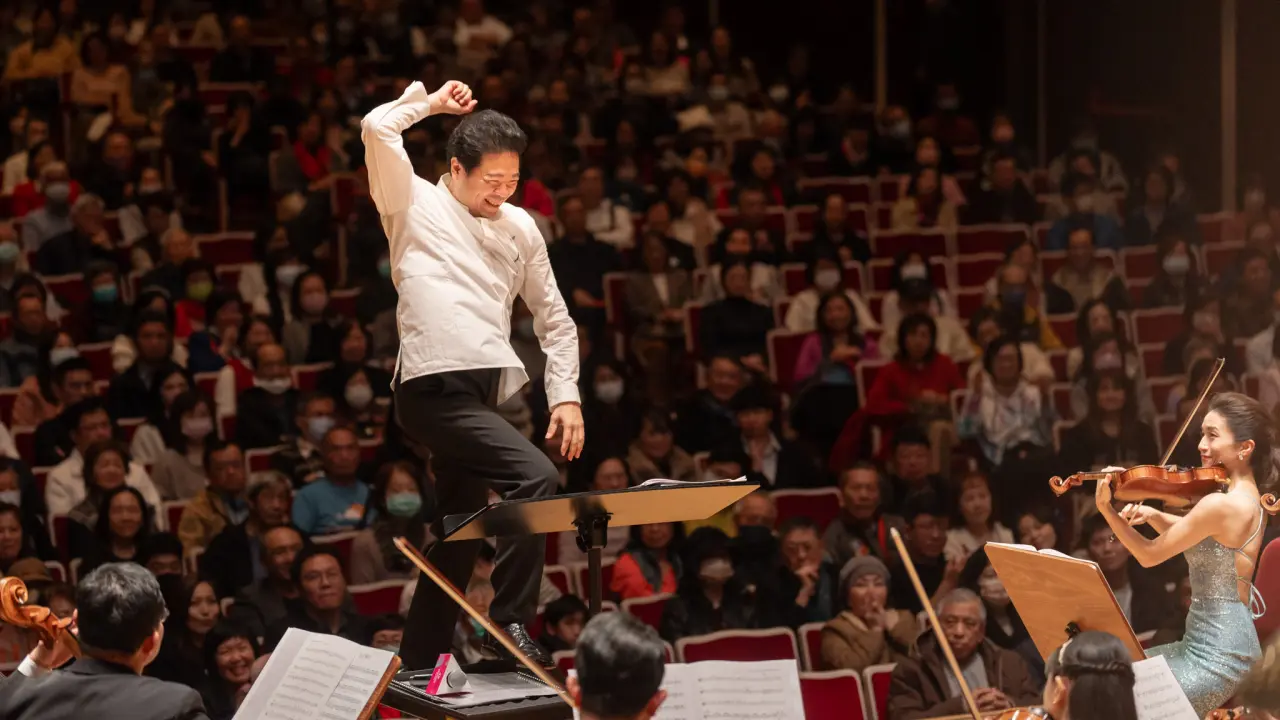
The second element, according to Huang, is the presence of "Drivers"—and not just one person, but many. He noted that OneSong’s founder and music director, Che-Yi Lee, possesses immense perseverance and dedication. Having studied the violin and harp alongside his father since childhood, Lee has composed over 2,000 works, arranged 5,000 pieces, and also trained as a conductor.
An even more legendary figure is Che-Yi Lee’s father, Wu-Nan Lee. Growing up in rural Kaohsiung in a family too poor to afford schooling, he only graduated from primary school and worked the fields every day. However, after hearing the sound of a violin once, he found it so beautiful that when he learned a violin cost TWD 400 (approx. $12.50 USD today, but equivalent to several months' salary for a laborer in the 1950s), he determined to buy one.
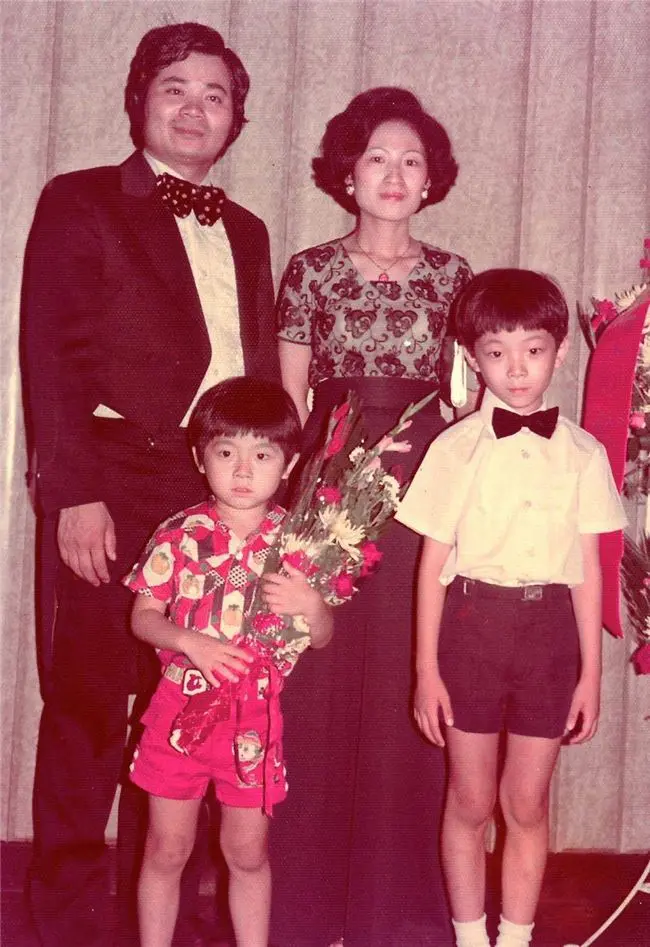
That was 70 years ago. Wu-Nan Lee worked tirelessly, even helping to farm others' fields, saving one dollar a day. After 400 days, he bought a violin and practiced diligently at home.
Later, while traveling in Japan, he heard the sound of a harp and considered it heavenly. At the time, a harp cost TWD 380,000 (approx. $11,700 USD). In the 1970s, a Taiwanese terraced house in Kaohsiung cost only TWD 250,000 (approx. $7,700 USD). Undeterred, he saved his money and finally imported one from abroad. Through self-study, he became Taiwan's first harpist who could play, teach, arrange, and even manufacture the instrument.
Realizing that harps were expensive because they were only made abroad, Wu-Nan Lee decided to open his own factory, named Emeharps. After 3 years of research and 9 years of trial-and-error manufacturing, he successfully produced harps and exported them to more than 20 countries.
Wu-Nan Lee’s initial capital came from a Bidding Club (a traditional Taiwanese peer-to-peer lending scheme), but in 2000, he was victimized by a default, resulting in a debt of TWD 30 million to TWD 40 million (approx. $920,000 to $1.23 million USD). Hundreds of creditors crowded his home.
To pay off the debt, Che-Yi Lee performed everywhere with his father from a young age, sometimes taking seven gigs a day, performing at both weddings (red events) and funerals (white events). Huang described Che-Yi Lee as a "musician of the wandering world" who deeply understands what music people like, becoming a performer who is also an expert storyteller.
Phonetically Close to "Wan-Sheng"—The Two Meanings of "OneSong"
Huang stated that the third condition for a brand is an Ecosystem and a platform. He said that everyone who hears OneSong feels both surprised and refreshed because, in the past, Taiwan lacked a strong classical music environment and a platform where like-minded musicians could perform freely, popularize classical music, and play music that everyone enjoys.
Since its founding in 2017, OneSong's performance has gradually been recognized by the public. Che-Yi Lee recalled, "After one performance, Tai Chang-chi, Chairman of the Taipei Inn Group, came to talk to me. He said he used to fall asleep every time he listened to classical music, but miraculously, during that night's performance, both he and his wife stayed wide awake."
Tai was so fascinated by OneSong that he sought out Lee for 19 consecutive days to offer development suggestions. Lee also consulted his friend and financial strategy expert Cesar Hao to define company strategies, including the English name "OneSong."
"The idea for OneSong was a stroke of genius. Besides being phonetically close to 'Wan-Sheng,' it carries two additional meanings: one is that everyone hides a song in their heart that represents Taiwan, and the other is that if you want to hear the songs of Taiwan, OneSong is the 'only' (One) choice," Lee said.
Regarding corporate support, Huang shared another example. Once, he gave a OneSong business card to the brother of Carol Yeh (wife of Stan Shih). Upon seeing it, he exclaimed, "Wait, isn't this address our house?" It turned out that OneSong's current base on Minsheng East Road was a house built by Mrs. Shih's father, and the property was owned by several of their siblings. Mrs. Shih had rented the house to OneSong without telling her brother, so he had no idea.
Huang said Carol Yeh only collects partial rent because she must for tax compliance, but she and her brother donate the entire rent back to OneSong, and even increase their donations further.
During the 2022 COVID-19 pandemic, when musicians had no income for a period, over a dozen entrepreneurs concerned about OneSong gathered to establish OneSong International Co., Ltd. They established that every musician employed would receive a base salary, as well as health, labor, and pension benefits. The company charter also stipulates that half of the surplus be distributed to the musicians, with the other half reserved for future development.
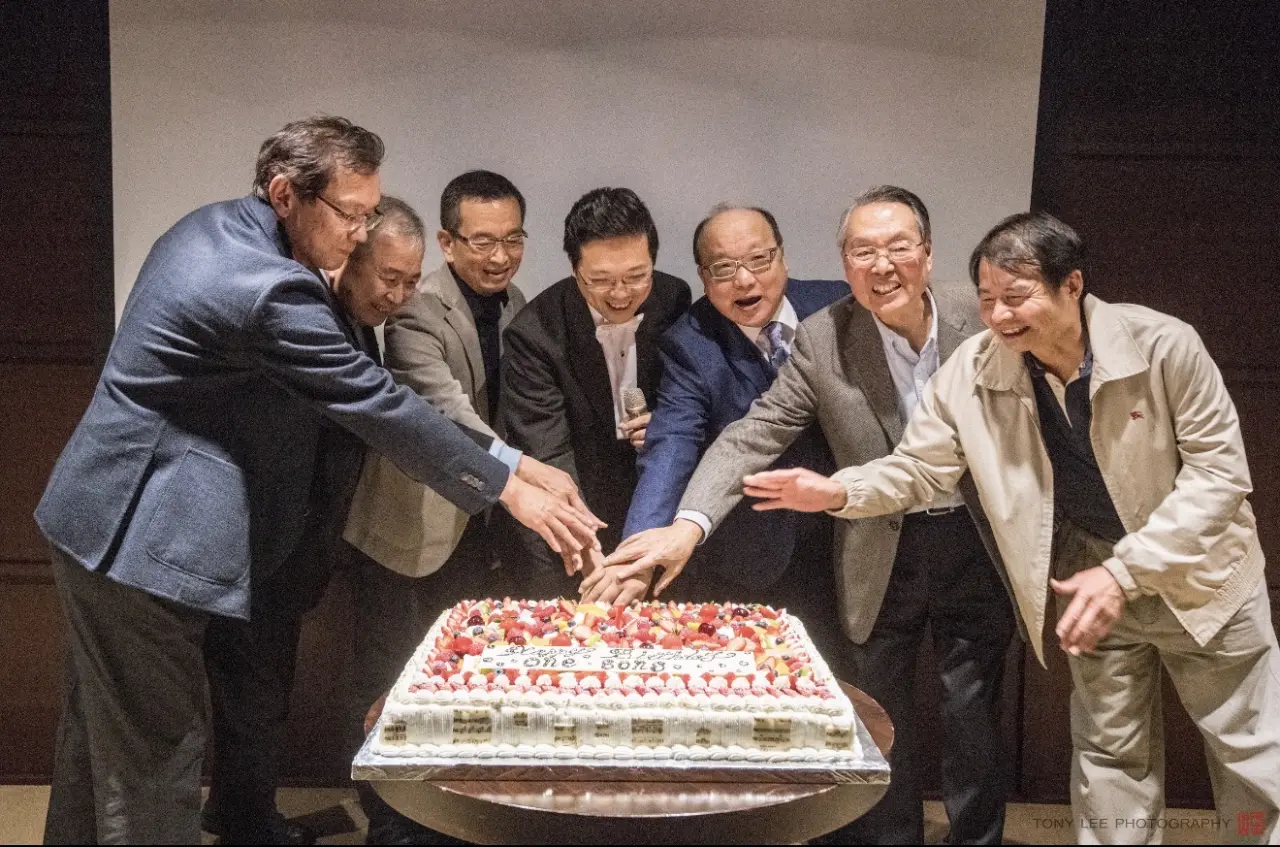
At that time, these dozen entrepreneurs contributed both money and effort, electing Stan Shih as the first head of the OneSong Support Association and appointing Annie Chen as CEO. Together, they built a OneSong team of 30 musicians and 20 administrative staff.
The rise of OneSong is not merely an artistic innovation but a symbol of a significant shift in Taiwan's industrial structure. For decades, Taiwan has been globally recognized for its precision semiconductor manufacturing and electronic contract work. Now, these tech giants—leaders who have spent years navigating international markets—are pouring their sophisticated brand logic, global experience, and substantial capital into cultural enterprises. This virtuous cycle, where "technology supports culture and culture enhances brand value," has become the most powerful backbone for Taiwan as it expands its cultural footprint internationally.
Establishing a Brand IP to Be Remembered Forever
Recruiting Taiwan’s finest musicians has always been Che-Yi Lee’s top priority, attracting not only rising stars but also heavyweight veterans. The orchestra’s official website provides detailed profiles of its members, each possessing extensive experience and numerous awards. This elite roster includes Wei-Yung Tseng, Chien-Wen Liang, Yu-Feng Huang, Yu-Heng Yen, Jui Wang, Chien-Hua Li, and Yi-Hsuan Chiu.
Lee shared that the orchestra’s principal violist, Jui Wang, had served in the Taipei Symphony Orchestra (TSO) for many years. Despite being only one year away from qualifying for a government pension, Wang decided to join OneSong early, believing that every moment spent away from the group was a missed opportunity.
Lee also believes that musicians need space to grow. Once musicians meet a specific performance quota with OneSong each year, they are encouraged to accept external invitations. In fact, OneSong frequently invites guest performers. Lee views it as an honor when his artists are invited to other orchestras or countries. If an artist receives a better offer elsewhere, Lee offers his blessings. "It represents the extension of the OneSong brand power; it means our talent is being recognized and valued by the world," Lee noted.
To discover young talent, OneSong has cultivated three internal composers aged between 24 and 30, and collaborates with nine external ones. This team of 12 composers and arrangers ensures that the orchestra truly performs music composed and arranged in Taiwan. The orchestra now possesses a repertoire of over 300 songs—resembling a Karaoke song list—all adapted into classical forms, allowing the audience to request songs for immediate live performance.
Brand building involves many layers, and OneSong’s priority is establishing recognizable and permanent Intellectual Property (IP). The New Year’s Day concert, launched in 2019, is a cornerstone of this strategy.
When discussing brand IP with Stan Shih, Lee noted that the world’s most prestigious example is the Vienna Philharmonic New Year's Concert, which began in 1939. This concert reaches one billion viewers annually, and its broadcasting rights are expensive; in Taiwan alone, the annual licensing fee ranges from TWD 3 million to 5 million (approx. $92,000 to $153,000 USD).
Shih, who has dedicated his life to brand management, suggested: "Listening to others' music to celebrate our own New Year doesn't seem right." He proposed that OneSong should establish its own New Year’s concert as a priority brand IP.
Thus, on New Year’s Day 2019, OneSong held its inaugural concert at Dahu Park in Taipei. Lee recalled that weather forecasts had predicted no rain for the first time in a decade, yet it rained that day. Despite the weather, over 3,000 people stayed, wearing raincoats to listen, unwilling to leave.
Since 2020, OneSong has secured the National Concert Hall for its New Year’s performances. The event is supported by 20 corporations, each sponsoring TWD 1 million (approx. $30,000 USD), totaling TWD 20 million (approx. $615,000 USD), which serves as a vital operating fund for the orchestra.
International Music Competition: Performing Taiwanese Material and Works by Taiwanese Composers
Two other key IPs, held biennially, are the OneSong International Music Competition and the "Crazy for Taiwan" symphonic-pop concert. Organizing an international music competition is a task usually reserved for government departments, but OneSong decided to take the lead. Despite the significant costs, they invite international musicians to perform Taiwanese music and require Taiwanese elements in composition entries.
The OneSong International Music Competition began in 2023, with the second edition scheduled for 2025. Foreign musicians from around the world have performed pieces such as Diu Diu Dang Ah (a folk song from Yilan), Green Island Serenade, and The Angel from Formosa. In the most recent competition, the championship was won by a quartet of four Russians, followed by a Taiwanese team in second place, and a multi-national string quartet in third.
When asked if focusing on "music written by Taiwanese people or using Taiwanese materials" is too narrow, Lee disagreed. He argued that Taiwanese composers can write about the world, and foreign composers can also utilize Taiwanese elements.
The "Crazy for Taiwan" concerts, also launched in 2023, are designed as symphonic-pop spectacles that integrate technology and visual imagery. Performed at the scale of a superstar's concert, the lineup has stunned the Taiwanese music scene. In 2023, the event featured Winnie Hsin, Olivia Tsao, Meng-Chieh Liu, and a virtual human of the late legend Teresa Teng. The 2025 edition will integrate the works of renowned illustrator Jimmy Liao with pop hits for a journey through "Jimmy’s Forest."
Lee explained that OneSong chose classical music because it is a globally recognized "highest art form." However, classical music can sometimes be perceived as aloof. To counter this, the orchestra follows the philosophy: "If the people do not go to the music, let the music go to the people."
Through the "Taiwan Outreach" project, musicians have carried heavy instruments to the summit of Nenggao North Peak, over 3,000 meters above sea level, to play Seediq Indigenous songs, saluting the mountains and the land at sunrise. One of the most moving memories for the members was performing in mountain tribes, where Indigenous children rushed the stage after the show to hug the musicians, pleading for them to return.
On another occasion, OneSong performed an unannounced show at a fish market in Magong, Penghu. The market fell silent as everyone became absorbed in the music. An elderly woman who had sold fish there for 35 years remarked, "The music was so beautiful. I've sold fish for many years, but today is the happiest day of my life."
Elevating the Sound of Taiwan into the Western Sanctuary of Classical Music
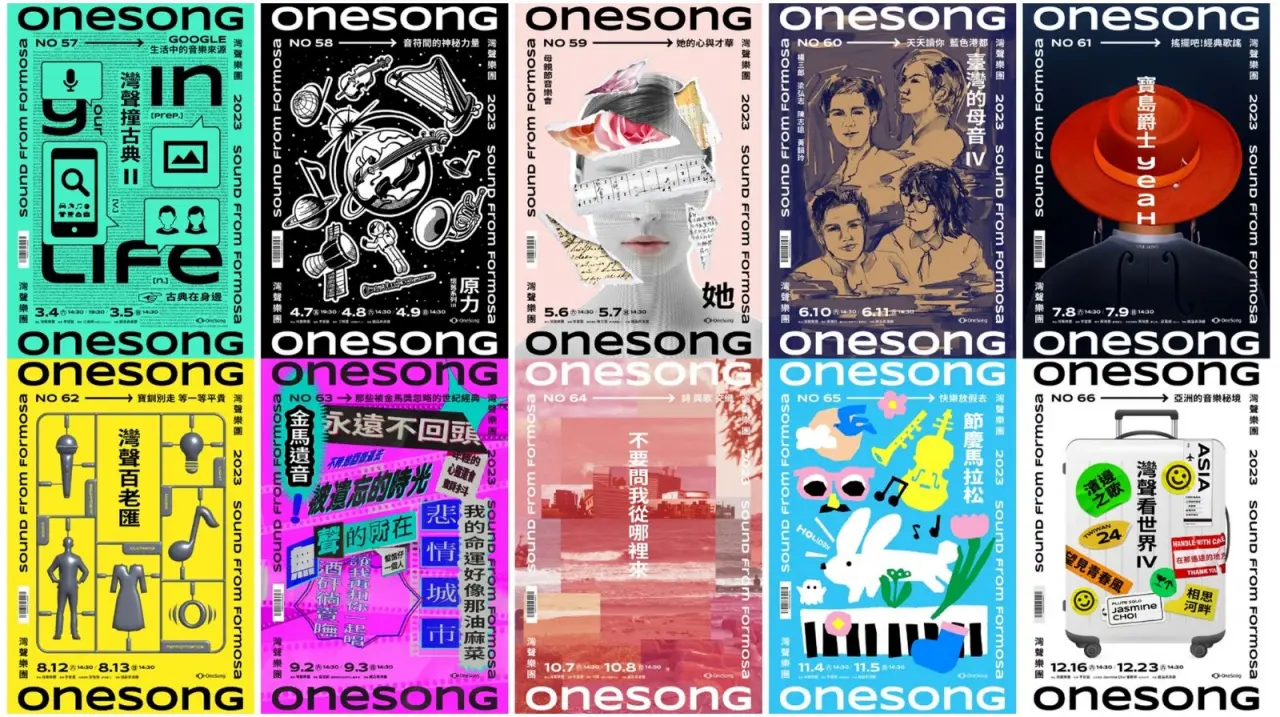
To sharpen its visual identity, OneSong recruited Godkidlla, a rising designer and Golden Melody Award winner, to design its annual concert posters. Each year follows a distinct concept—such as "OneSong O Around You" in 2024 or a fashion magazine style in 2023. These designs are sometimes nostalgic and sometimes "jump tone," reflecting OneSong’s image as both classical and fashionable.

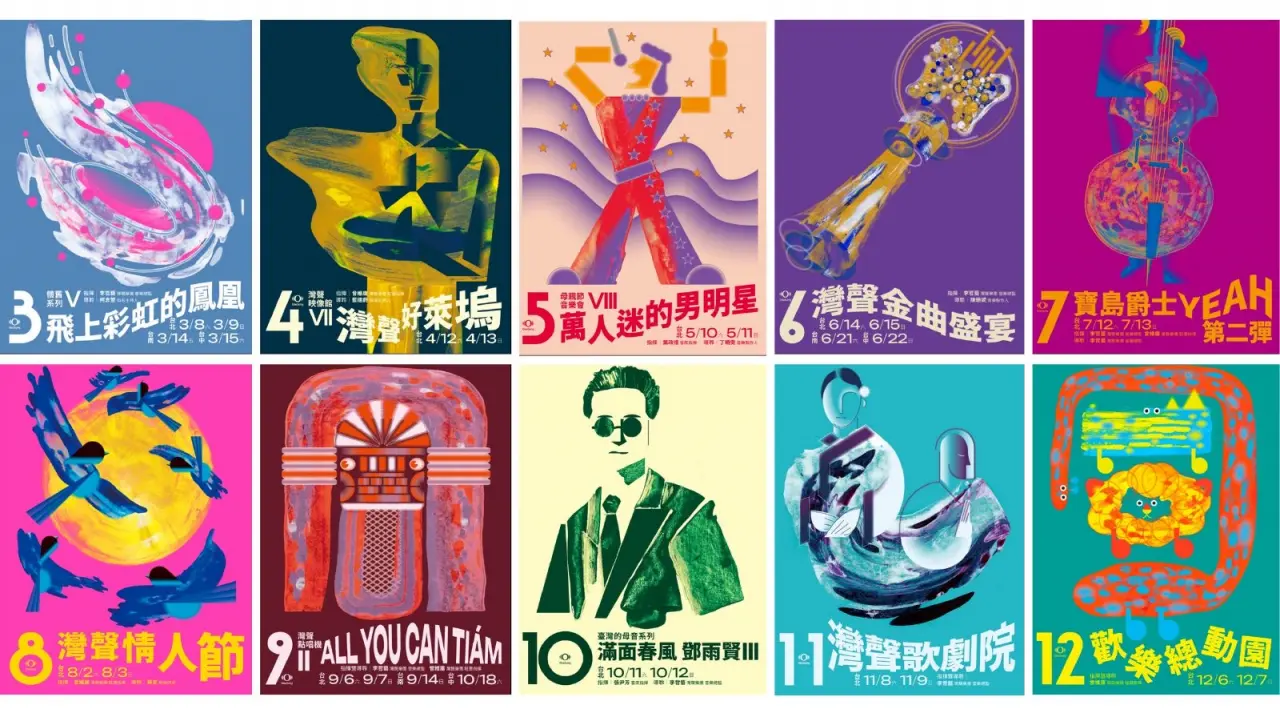
Returning to the "Family Animal Music Party," the 31-year-old resident conductor Wei-Yung Tseng spoke about his dreams before performing Snail. He recalled hearing Jay Chou sing the song when he was young and feeling a profound connection. "There is a line about the snail climbing up step by step. I thought, isn't that me? Isn't that every 'small' person working hard to reach the peak of their dreams?"
Like a snail or a little bird, Tseng now stands on the OneSong stage. Through the magic of music, these young musicians provide hope, warmth, and strength to the audience. In the past, Taiwan lacked a classical platform for young talent to fully express their creativity; OneSong allows them to fulfill their dreams without having to move overseas.
In November, I attended performances by two German orchestras: the Berliner Philharmoniker and the Deutsche Philharmonie Merck. Founded in 1882 and 1966 respectively, these institutions have 143 and 59 years of history. They are premier brands in the hall of classical music, and their performances were, predictably, impeccable.
However, the eight-year-old OneSong is working tirelessly to emerge as a distinct force, seeking to carve out a niche and place the voice of Taiwan within the sanctuary of Western-originated classical music. I believe the classical market is large enough to accommodate more brands. By integrating various forces and attempting an innovative path, this beautiful sound from Taiwan has a great chance to add another moving story to the global image of Taiwan.
Related Articles
Micron Announces Its Largest Rewards Ever. Its Taiwan Union's Demands Expose a Clash of Pay Systems. A strike threat at Taiwan's largest foreign investor, read in three dimensions
TSMC's 3nm rinse comes exclusively from AEMC, a Taiwanese company once withdrawn from the Emerging Stock Board

Taiwan AI Industry Upgrade Forum Series || Event Report:America Wants More Manufacturing. What Does It Take for Taiwan’s Suppliers to Follow?