"From West to East": Taiwan's New Global Strategy. Why the Tech Island is Exporting its Supply Chain to the US.
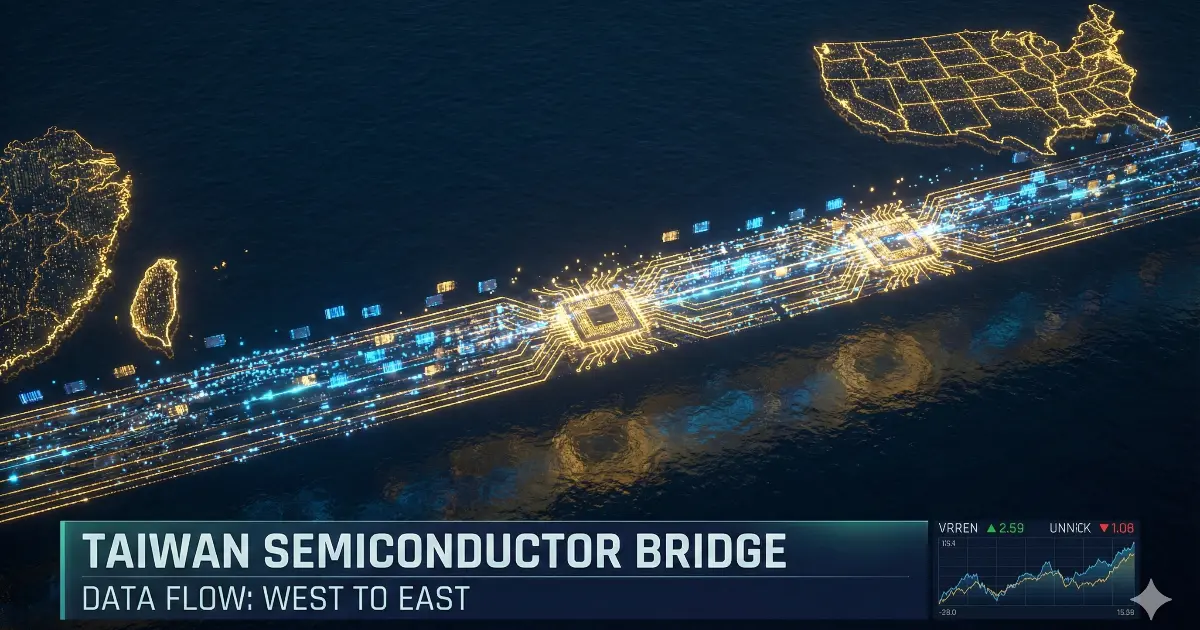
Just as TSMC (Taiwan Semiconductor Manufacturing Co.) announced stellar fourth-quarter earnings and a robust outlook for the year, the long-negotiated trade agreement between Taiwan and the United States has officially crossed the finish line. The Taipei Economic and Cultural Representative Office in the United States (TECRO), representing the Taiwanese government, and the American Institute in Taiwan (AIT), representing the US government, have formally signed the accord.
In this landmark deal, Taiwan has committed to an investment and credit guarantee package totaling US$500 billion. In exchange, Taiwan has secured a commitment from the US to cap the "Reciprocal Tax" on Taiwanese goods at a maximum of 15%.
Following the signing, the market has been abuzz with varying interpretations. I was particularly struck by the analysis of Li Zhenyu(李鎮宇), Chief Economist at Taishin Financial Holdings, who views this outcome as exceeding expectations. Li argues that unlike Japanese and Korean firms, which are often compelled to make direct cash infusions or financial commitments, Taiwan has adopted a unique approach: a private-sector-led "Supply Chain Cluster Export" model. This represents a distinct "Taiwan Model" of industrial cooperation.
Li’s analysis highlights three key points:
First is the US$250 billion in autonomous corporate investment. This figure likely includes the US$165 billion already committed by TSMC, meaning the new capital commitment stands at approximately US$85 billion. Given the current global expansion roadmap of Taiwan’s semiconductor industry, this is a highly achievable target.
The second US$250 billion component comes in the form of "Government-backed Credit Guarantees." This mechanism involves a credit guarantee fund—supported by government endowment—that provides backing and financing support for corporate investment projects in the US. Projects backed by this government-supported credit guarantee significantly reduce risk for lenders, making it easier for companies to secure financing from the financial sector. This effectively lowers the barrier to entry for supply chain manufacturers moving into the US market.
Third, agricultural products were notably absent from the spotlight of this agreement. Li interprets this as a sign that US strategic interest is squarely focused on the semiconductor supply chain, with little interest in traditional sectors.
The "Taiwan Model": Government Facilitated, Market Led
Li’s analysis suggests that this agreement embodies a market economy concept where "the government provides passive assistance, but the private sector retains active control." Distinct from the models applied to Japan and Korea, where investment amounts are often dictated, Taiwan is prioritizing "Supply Chain Ecosystem Cooperation." This creates a "Taiwan Model" that is deeply integrated with US clients.
The primary beneficiaries of the US$250 billion credit guarantee program are expected to be the vast network of small and medium-sized enterprises (SMEs) in the supply chain that are following TSMC to the US.
In summary, Taiwan is using capital and technology to support America’s return to manufacturing prominence. Enterprises are autonomously investing US$250 billion in semiconductors, AI, and energy, while the government backs them with a credit guarantee facility of up to US$250 billion.
On the US side, resources committed include assistance with land acquisition, utilities (water and power), tax incentives, and visa processing.
I largely agree with Mr. Li’s assessment. However, regarding the calculation of TSMC’s US$250 billion investment, I have seen differing interpretations. For instance, Howard Lutnick, a key figure in the US commerce administration, explained that the US has already granted Taiwan a US$100 billion credit offset. This is because the US$100 billion TSMC committed to investing in collaboration with the Trump administration for 2025 is being counted towards this US$250 billion total.
Consequently, many observers believe that President Trump does not intend to count the US$65 billion committed during the Biden administration. This would be entirely consistent with Trump’s negotiation style.
However, whether that US$65 billion is included or not, I believe the investment figure is ultimately just a commitment. The timeline for execution and when it will be fully realized remain variable. Compared to the strategic industrial alliance established between the two sides, the specific details of the numbers may be less critical.
New Era of US-Taiwan Cooperation: Taiwan's Dominance in AI Exceeds the PC Era
Furthermore, I would like to offer two industrial analytical perspectives regarding the future trends of US-Taiwan cooperation.
First, industrial collaboration between Taiwan and the US has always been the winning formula for Taiwan’s tech sector. From Personal Computers (PCs) and smartphones to today's AI, Taiwan has achieved its global status through complementary cooperation with the US in "contract manufacturing" and "advanced R&D."
Taking a deeper look, if we compare Taiwan’s market share in manufacturing during the PC era versus the AI era, we find that Taiwan’s dominance in AI is even more pronounced. In AI chips and AI data center infrastructure, Taiwan’s global market share exceeds 90%. It is effectively playing a "Winner-takes-all" role.
Naturally, this achievement is partly due to the efforts of Taiwanese enterprises, but it is also clearly driven by geopolitical factors—specifically, the US-China tech war. During his first term, President Trump initiated trade and tech wars with China, prompting many supply chains to exit the country. Furthermore, as Western nations ceased utilizing China’s "Red Supply Chain," Chinese firms were blocked from this high-end manufacturing system. This exclusion allowed Taiwan to drive its market share in the AI industry far beyond what it achieved in the PC era.
Today, Taiwan’s position in AI hardware manufacturing is more secure than ever. Taiwan provides core AI chips and server products for NVIDIA and the "Magnificent Seven" US tech giants, while the Chinese supply chain remains excluded. Measures such as bans on the export of equipment and chips to China have objectively acted as tailwinds, cementing Taiwan’s status as the king of AI chips and servers.
Critics often argue that Taiwan’s industrial structure is unbalanced—"too strong in hardware, too weak in software." However, Taiwan’s prowess in information electronics and semiconductor hardware manufacturing is now unrivaled. This industrial "moat" is difficult to breach and is the reason why Taiwan’s economy and stock market capitalization continue to hit new highs.
With Taiwan’s electronics industry now firmly established, US-Taiwan cooperation is poised to expand into more fields, such as autonomous vehicles, humanoid robots, the defense industry, and even outer space. The influence of Taiwan’s electronics sector will continue to expand and break new ground; this is Taiwan’s great future opportunity.
TSMC’s US Investment: A Catalyst for Suppliers to Gain Global Market Share
Secondly, I must address and correct the recurring concern in public discourse regarding "Industrial Hollowing-out"—the fear that investing in the US involves moving the entire supply chain away, thereby emptying out Taiwan.
It is common knowledge that TSMC holds a dominant global market share in wafer foundry services. However, TSMC achieved this status through the support of a globalized supply chain. Last year, TSMC’s capital expenditure was approximately US$40 billion. Of this, only 10% of suppliers were from Taiwan; the remaining 90% were top-tier global suppliers, including ASML (Netherlands), Applied Materials (USA), and Tokyo Electron (Japan).
This means that as TSMC’s capital expenditure is projected to increase to US$52–56 billion this year, it will continue to rely on this global supply chain. Therefore, when TSMC establishes a massive production cluster in Arizona, Taiwanese suppliers must not only cooperate but should view this as an urgent opportunity to go. They need to compete on the same stage with the other 90% of global suppliers. If they don't go, they risk losing the business entirely.
Therefore, when critics ask, "Why are we moving an entire Science Park to the US?" they reveal a lack of understanding regarding semiconductor clusters. TSMC’s US investment inevitably requires immediate support from a vast number of suppliers. Consequently, semiconductor suppliers from all over the world will gather there. This is a business opportunity that companies absolutely cannot afford to miss, especially with the prospect of five or even ten fabs being built in the future.
Thus, when Taiwan assists the US in building a semiconductor supply chain, and even proactively provides supporting infrastructure similar to a Science Park, it is an inevitable result of industrial logic. This is not a passive loss (hollowing out), but an active expansion. It creates another massive opportunity for Taiwan.
In reality, not all Taiwanese semiconductor suppliers are as dominant as TSMC; there are many competitors from other nations with greater strength. However, TSMC’s intensified investment in the US serves as a vehicle for Taiwanese suppliers to increase their global market share and influence. Taiwanese companies must invest in the US and compete with world-class rivals on the international stage. This is an inevitable choice for survival and upgrading.
From "Going West" to "Going East": The Global Growth of Taiwanese Enterprises
Moreover, Taiwanese firms investing in the US are not just chasing TSMC’s orders; they are positioning themselves to win business from US giants like Intel, Texas Instruments (TI), and GlobalFoundries. These companies are also upgrading their process technologies and require the high-quality equipment and component services that have been cultivated by Taiwan’s advanced manufacturing ecosystem.
Therefore, Taiwanese suppliers investing in the US should absolutely not be defined as "hollowing out Taiwan." This is a survival strategy for global development. From the perspective of future scalability, it extends Taiwan’s industrial influence, making Taiwanese business power truly global.
Looking back at the 1990s, Taiwanese enterprises invested heavily in China (the "Go West" strategy). At that time, Taiwan played a role in assisting the rise of China’s manufacturing sector, helping it become the "World’s Factory." However, through that process, Taiwanese businesses also grew themselves. Taiwan’s top five electronics manufacturing giants (often called the "EMS Titans") successively became trillion-dollar enterprises during this period. This was a model where Taiwanese businesses helped the host country develop while simultaneously strengthening themselves.
Of course, China later evolved into a formidable competitor and, due to the high homogeneity with Taiwan’s industries, eventually sought to replace global suppliers. However, viewed through the lens of overseas expansion and influence, I believe that while the investments in China did cultivate a powerful rival, it was also an indispensable process for Taiwanese businessmen to accumulate capital and strengthen their capabilities.
So today, we should not view investment in the US through the negative lens of "hollowing out." Instead, we should think of it from the strategic height of "Extending National Power and Expanding Industrial Frontiers." This is the key perspective for interpreting the US-Taiwan cooperation agreement today.
Related Articles
Micron Announces Its Largest Rewards Ever. Its Taiwan Union's Demands Expose a Clash of Pay Systems. A strike threat at Taiwan's largest foreign investor, read in three dimensions
TSMC's 3nm rinse comes exclusively from AEMC, a Taiwanese company once withdrawn from the Emerging Stock Board
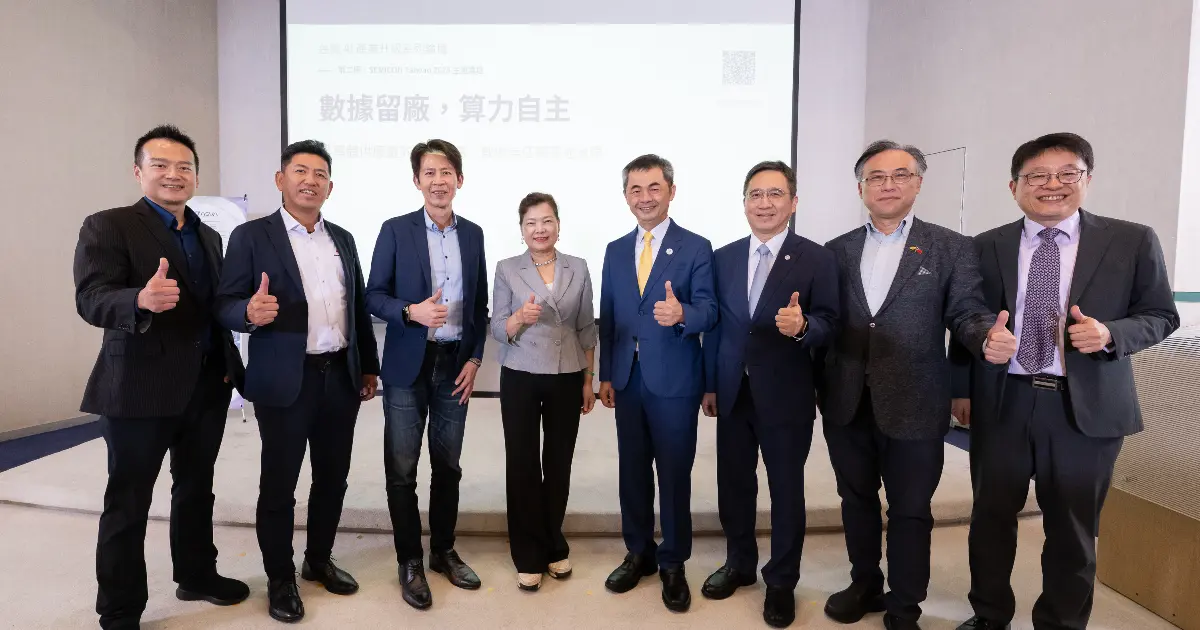
Taiwan AI Industry Upgrade Forum Series || Event Report:America Wants More Manufacturing. What Does It Take for Taiwan’s Suppliers to Follow?